Home About Gallery Contact

About AI Technology


What is AI?

Artificial Intelligence (AI) refers to systems or machines that simulate human intelligence to perform tasks and can iteratively improve themselves based on the information they collect. It spans fields such as machine learning, natural language processing, computer vision, and robotics.

Narrow AI: AI designed to perform specific tasks, like voice assistants or recommendation algorithms.
General AI: Hypothetical AI with human-like understanding and learning capabilities.

AI Tools


1. ChatGPT

ChatGPT

ChatGPT is a generative AI chatbot developed by OpenAI that uses natural language processing to interact, assist, and provide information across a range of topics.

  • Developer:Developed by OpenAI, ChatGPT is one of the most widely used generative AI chatbots.

  • Purpose:ChatGPT is designed to engage in natural language conversations, provide information, answer questions, and assist users with various tasks across multiple domains.

  • Technology:Based on OpenAI’s GPT models (such as GPT-4), ChatGPT uses a large language model trained on diverse text data to generate coherent and contextually relevant responses.

  • Applications:Customer support, content creation, educational assistance, personal productivity, and entertainment. It can also assist with coding and technical queries.

  • Target Users:Individuals, students, educators, customer support teams, and anyone looking for a versatile AI that can interact across a range of subjects.

2. Gemini

Gemini

Gemini is an advanced AI tool designed to assist users with insights and analytics, leveraging powerful machine learning capabilities.

  • Developer:Created by Google DeepMind, the Gemini AI is a next-generation large language model (LLM).

  • Purpose: Gemini is designed to improve upon its predecessor, Bard, offering more advanced conversational capabilities, better performance in reasoning tasks, and understanding of complex instructions. It aims to provide both general-purpose assistance and specialized insights across various fields.

  • Technology: Based on the latest advancements in LLM technology, Gemini combines powerful neural networks and reinforcement learning methods to enhance its problem-solving abilities and handle nuanced conversations.

  • Applications: Like ChatGPT, Gemini is used for natural language processing tasks, but it also has potential in specialized fields such as scientific research, healthcare, and business analysis.

  • Target Users: Businesses, researchers, and developers looking for an AI tool capable of handling advanced tasks in a wide range of domains, with a focus on precision and depth of understanding.

3. Jasper

Jasper

Jasper is an AI content generation tool that assists in creating marketing copy, blog posts, and other content with ease and efficiency.s.

  • Purpose: Jasper (formerly Jarvis) is an AI writing assistant designed to help users create high-quality content. It's used primarily for marketing, copywriting, and content generation, such as blog posts, social media content, and advertising copy.

  • Technology: Built on advanced language models like GPT-3 and later GPT-4, Jasper uses machine learning to generate human-like text based on user prompts.

  • Features: Jasper includes templates for various content types (e.g., blog posts, social media ads), tone settings to match brand voice, and collaborative features for teams.

  • Target Users: Content creators, digital marketers, social media managers, and anyone in need of automated writing assistance.

4. Claude

Claude

Claude, developed by Anthropic, is an AI model designed to provide meaningful conversational responses with a focus on safe and helpful assistance.

  • Developer: Created by Anthropic, a company focused on AI safety and research.

  • Purpose: Named after Claude Shannon, the father of information theory, Claude is a conversational AI similar to ChatGPT but emphasizes ethical considerations and safety in AI use.

  • Technology: Claude is built using a large language model (LLM) optimized for safe interactions. Anthropic’s approach involves training the model to follow “Constitutional AI,” which means it adheres to a set of values designed to prevent harmful or biased responses.

  • Applications: Claude is used in customer support, education, research, and areas where safe and reliable information is critical.

  • Target Users: Businesses, educators, researchers, and individuals looking for an AI assistant focused on ethical AI practices.

5. DALL-E

 DALL-E

DALL-E is an image generation AI by OpenAI that can create unique images based on text prompts, used for creative visual content generation.

  • Developer: Developed by OpenAI, DALL-E is named after Salvador Dalí and Pixar's WALL-E.

  • Purpose: DALL-E is an AI image generator capable of creating images from textual descriptions. It can generate highly detailed and imaginative visuals based on a prompt, such as “a futuristic cityscape at sunset.”

  • Technology: DALL-E uses a deep learning model that combines natural language processing and computer vision to interpret text and create visual representations.

  • Applications: Graphic design, art, advertising, social media, and any field requiring quick, creative visuals.

  • Target Users: Artists, designers, marketers, content creators, and anyone looking to create images quickly and creatively without traditional design tools.


What are the different types of AI?


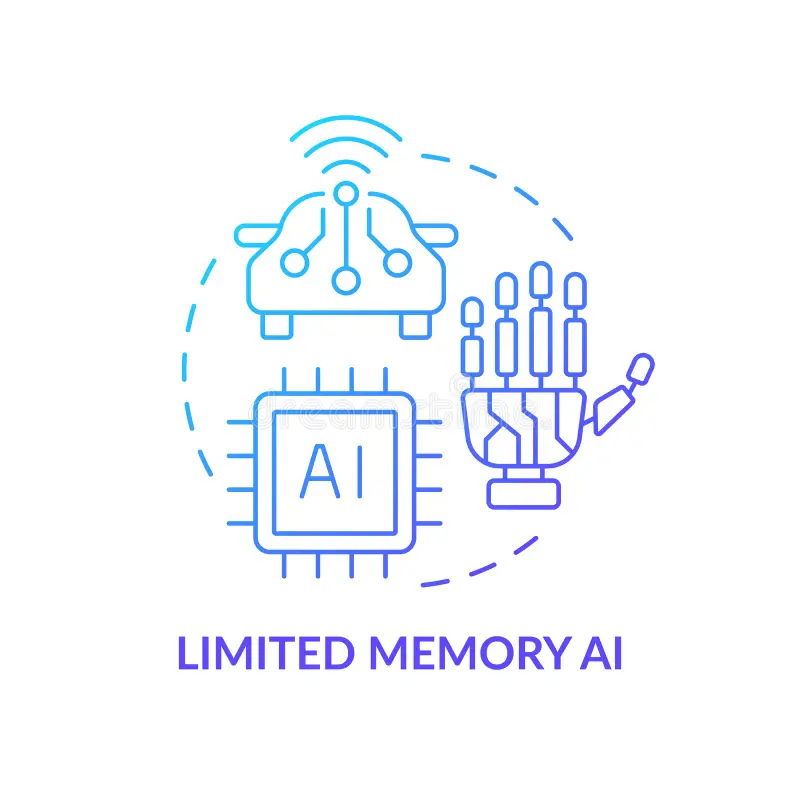
1. Limited Memory


 Limited memory
  • Limited memory AI learns from the past and builds experiential knowledge by observing actions or data. This type of AI uses historical, observational data ...

2. Reactive Machines


Reactive Machines
  • Reactive machines are AI systems that have no memory and are task specific, meaning that an input always delivers the same output. Machine learning models ...

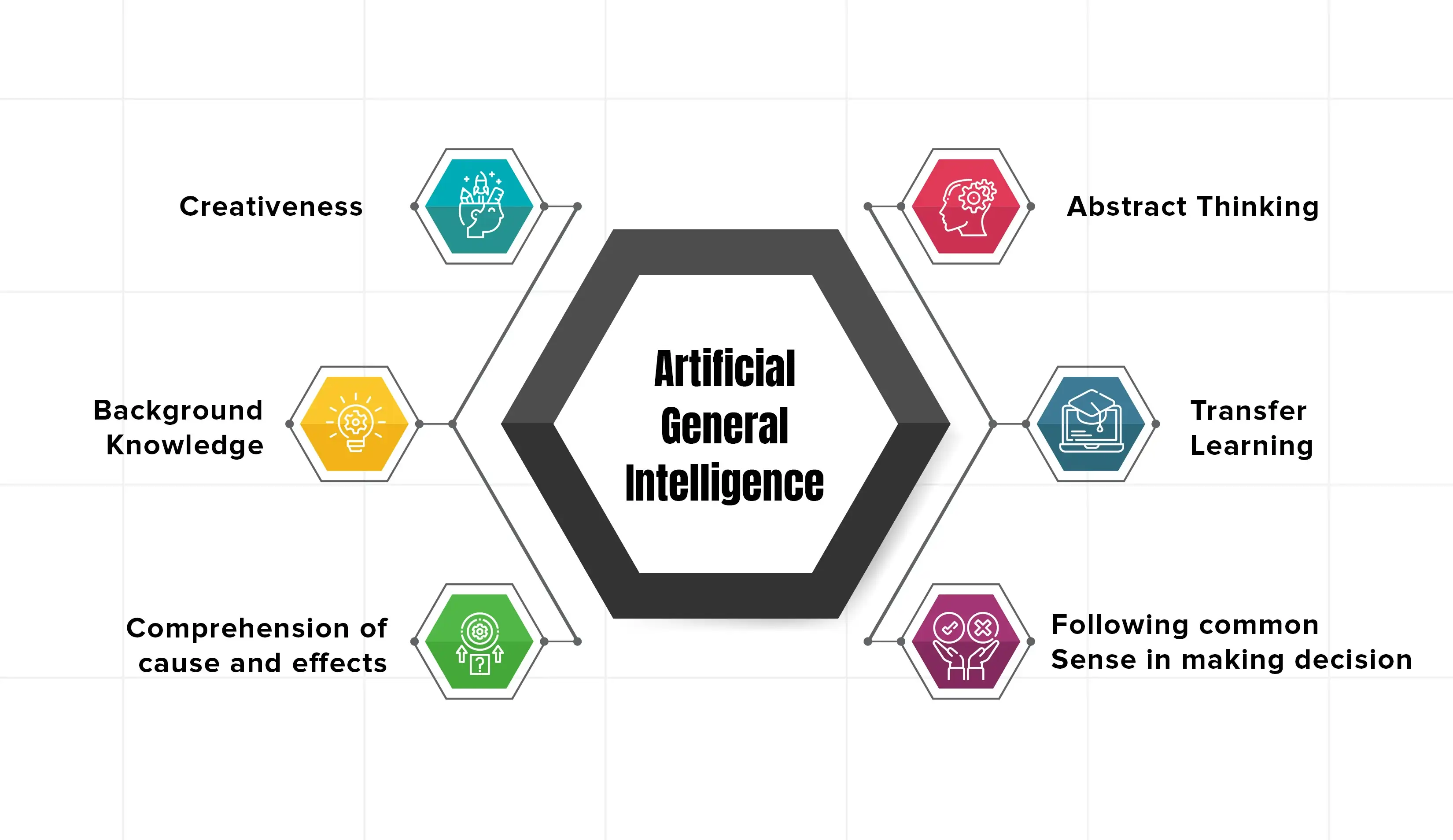
3. Artificial General Intelligence


Artificial General IntelligenceI
  • Artificial general intelligence (AGI) is a type of artificial intelligence (AI) that matches or surpasses human cognitive capabilities across a wide range of cognitive tasks. This contrasts with narrow AI, which is limited to specific tasks.[1] Artificial superintelligence (ASI), on the other hand, refers to AGI that greatly exceeds human cognitive capabilities. AGI is considered one of the definitions of strong AI.

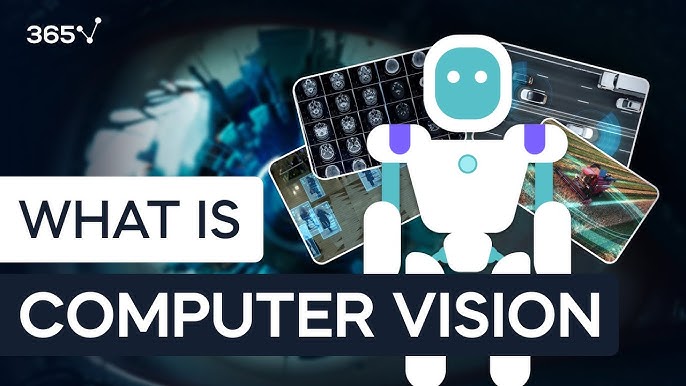
4. Computer vision


Computer vision
  • Computer vision tasks include methods for acquiring, processing, analyzing and understanding digital images, and extraction of high-dimensional data from the real world in order to produce numerical or symbolic information, e.g. in the forms of decisions.

5. Robotics


robotics
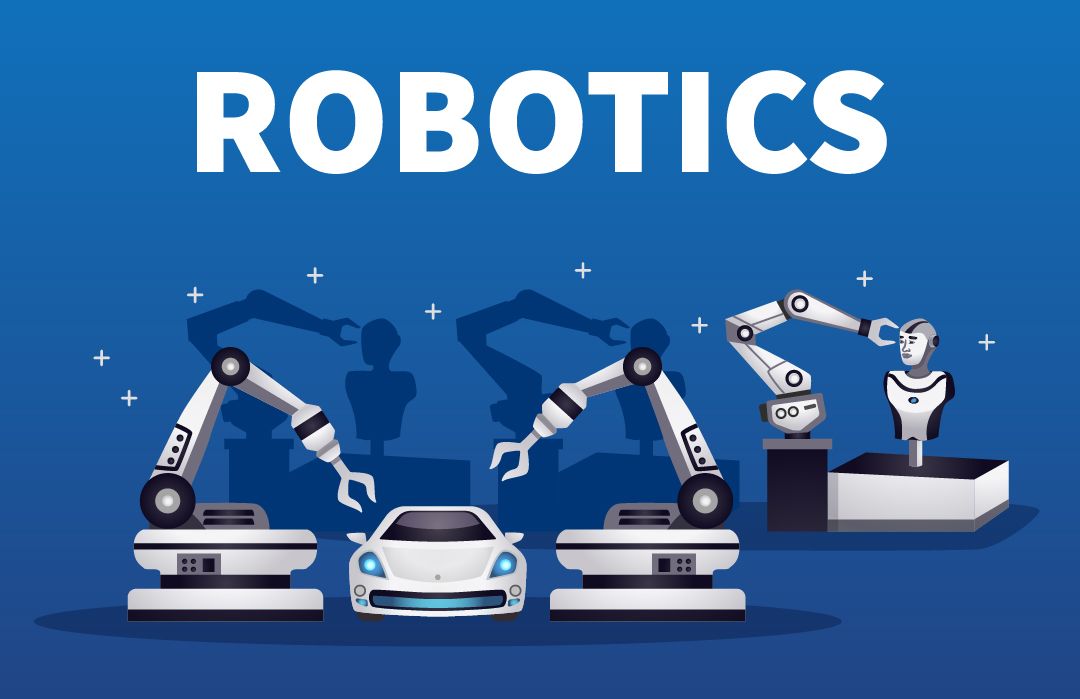
  • Robotics is the interdisciplinary study and practice of the design, construction, operation, and use of robots. Within mechanical engineering, robotics is the design and construction of the physical structures of robots, while in computer science, robotics focuses on robotic automation algorithms.


Famous AI robots


1.Boston Dynamics Atlas


Boston Dynamics Atlas
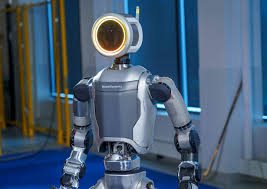
  • Boston Dynamics Atlas. US-based robotics and automation company, Boston Dynamics created its bipedal humanoid robot Atlas in 2013. The company has been ...

2.Ameca


Ameca
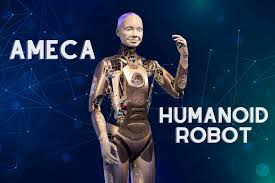
  • Ameca is the world’s most advanced human shaped robot representing the forefront of human-robotics technology. Designed as a platform for development into future robotics technologies, Ameca is the perfect humanoid robot platform for human-robot interaction. We focus on bringing you innovative technologies, which are reliable, modular, upgradable and easy to develop upon.

3. Sophia


Sophia
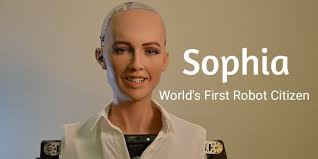
  • Sophia is a female social humanoid robot developed in 2016 by the Hong Kong–based company Hanson Robotics. Sophia was activated on February 14, 2016, and made her first public appearance in mid-March 2016 at South by Southwest (SXSW) in Austin, Texas, United States. Sophia was marketed as a "social robot" who can mimic social behavior and induce feelings of love in humans.

4. Geminoid dk


 geminoid dk
  • A biomimetic anthropomorphic robotic head with human-like kinematic properties. Geminoid is going to be used for studying human-robot interaction, in particular people's emotional responses when they face an android representing another person. All of the movements and expressions of Geminoid DK are remotely controlled by an operator with a computer, who uses a motion-capture system that tracks facial expressions and head movements.

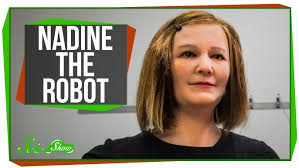
5.Nadine


 Nadine
  • Robotics is the interdisciplinary study and practice of the design, construction, operation, and use of robots. Within mechanical engineering, robotics is the design and construction of the physical structures of robots, while in computer science, robotics focuses on robotic automation algorithms.

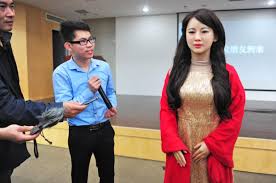
6.jia jia


 Nadine
  • Jia Jia is a humanoid robot created by the University of Science and Technology of China (USTC). She is known for her realistic appearance and ability to interact with humans.